Glacier Route ReviewDesk +886 2 2582 7415

Coverage · Editorial map

What the articles cover

Six standing subject areas anchor the desk’s reading, review and critique of AI in bond-portfolio risk assessment.

Area 01

Credit spread and default-risk models

Machine-learning approaches that re-price credit curves and score issuer-level default risk. Reviews ask how such models behave with illiquid issuers, thin default histories and abrupt spread repricing.

  • How features degrade when liquidity dries up
  • Whether backtests span a genuine default cycle
  • Fair comparison against conventional structural models
Area 02

Rates scenarios and duration stress

Scenario engines that generate yield-curve and macro paths for stressing duration and convexity — including the foreign-currency books hedged back to New Taiwan dollars that local institutions manage.

  • Scenario grids that reach beyond historical replay
  • Treatment of hedging cost alongside rate movement
  • Regime shifts handled explicitly, not smoothed away
Area 03

Ratings migration and early-warning signals

Models that flag credit deterioration before agencies act. The desk examines what counts as a signal, versus what merely counts the calendar of rating announcements.

  • Claimed lead time against realized misses
  • Coverage of small and thinly traded issuers
  • Noise behaviour around agency review windows
Area 04

Liquidity and market-impact estimation

Analytics that estimate how much a corporate-bond book can move without paying for the privilege — often the least forgiving test an AI method faces.

  • Bid-ask proxies assembled from sparse trades
  • Impact estimates under stressed turnover
  • Capacity warnings for concentrated positions
Area 05

Model risk, validation and explainability

The quieter half of the subject: how methods are tested before portfolios rely on them, and whether their explanations inform decisions or merely accompany them.

  • Out-of-sample honesty and feature leakage
  • Explanations that carry weight, and those that decorate
  • Validation cadence suited to fixed-income data
Area 06

Data plumbing for fixed-income AI

Behind every confident model sits reference data, curve construction choices and vendor claims — the desk reads these the way mechanics read a service manual.

  • Entity mapping and reference-data quality
  • Curve construction choices that quietly steer results
  • Vendor dataset claims worth cross-checking
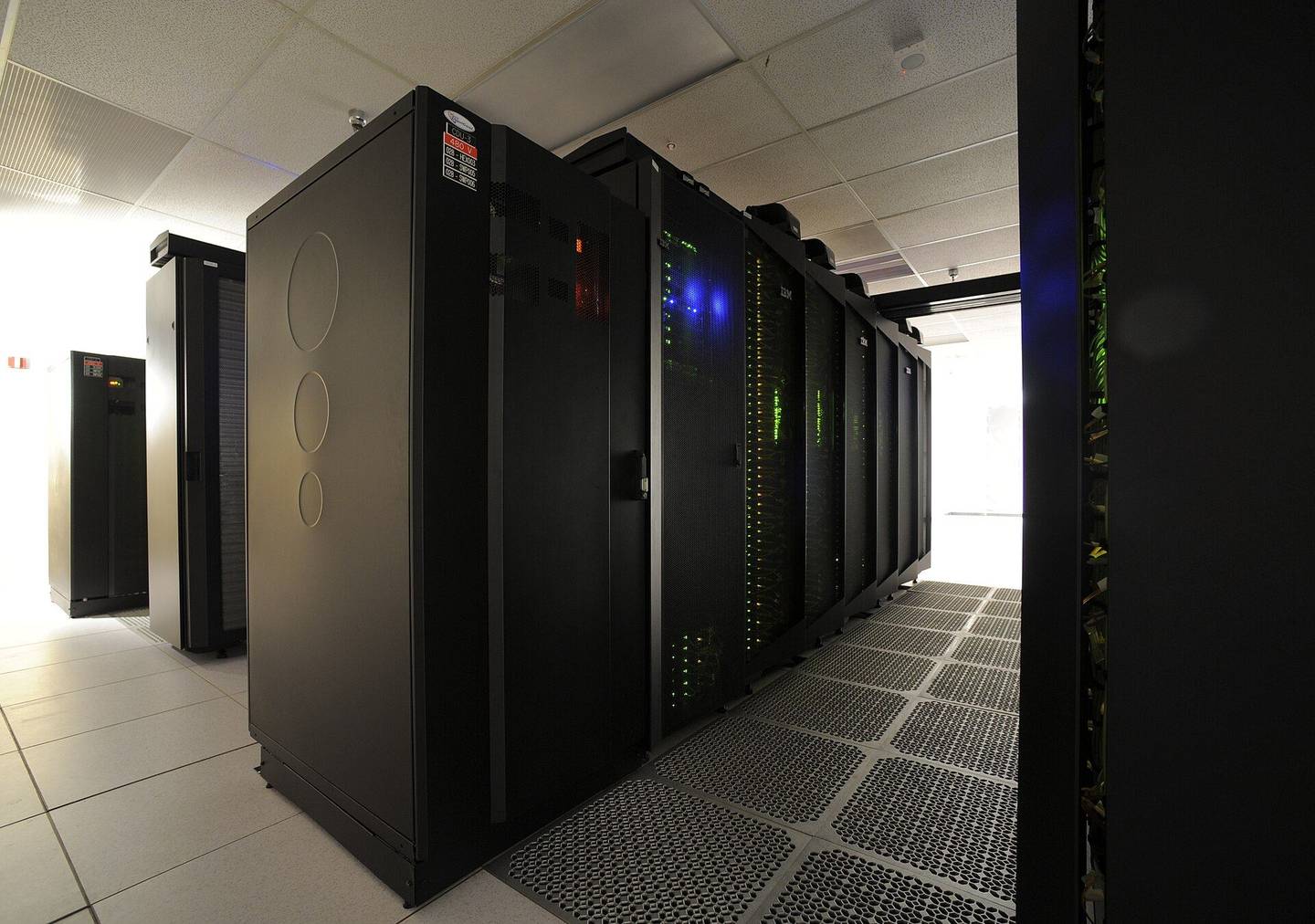
Rows of supercomputer racks with cable management in a machine room
Discover supercomputer racks. Fittingly, the publication reads studies born on machines like this — and asks how the results survive a bond portfolio’s slower, messier data. Photograph: NASA Goddard Space Flight Center, public domain, via Wikimedia Commons.

A method you want reviewed that fits none of these areas? Ask the desk directly — send an inquiry and it will be considered on its merits.